Approach
Collaboration, agency, and care as the structure of the work.
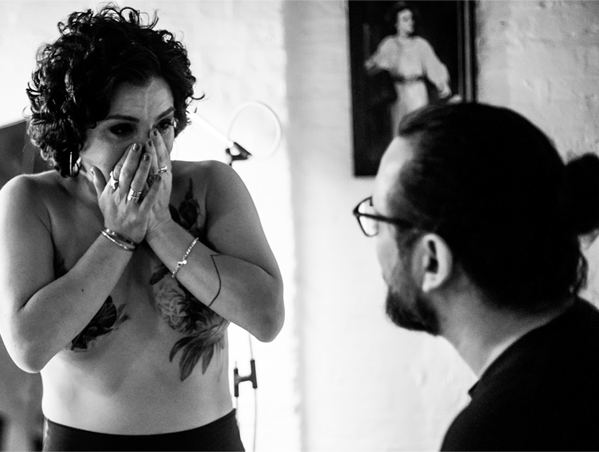
Many people experience a change in how they relate to their body. Medical treatment, trauma, loss, or other significant events can alter how the body is experienced. Often, people come to tattooing after having little control over what happened to their body, and are seeking a way to make a choice for themselves.
My practice is built around collaboration and agency. The person receiving the tattoo remains actively involved throughout the process. Decisions are made together and can be revisited at any point. The pace of the work is guided by the person in the chair, with space to pause, redirect, or stop when needed.
In post-traumatic and post-medical contexts, tattooing can become a way of choosing again. Sensation is approached with care, and trust is established gradually. The process prioritizes clarity, consent, and responsiveness, allowing the work to unfold in a way that supports both physical and emotional comfort.
My goal is to support people in reclaiming agency over their body through a collaborative and intentional tattooing process. The tattoo becomes something chosen and shaped together, and carried forward as part of an ongoing relationship with the body.
David Allen · Chicago
Agency After Non-Choice
We operate in spaces where bodies have been acted upon: by illness, trauma, or necessity. Our practice creates conditions where choice can return, allowing people to participate intentionally in what happens to their body and how it is marked.
Guiding question
Does this restore authorship and control to the person?
Care as Structure
Care in our practice is built into the framework, not added on emotionally. It appears through pacing, listening, permission to pause or change direction, and clear processes that support safety and clarity. The structure itself protects the person.
Guiding question
Does the structure of this experience support safety, clarity, and trust?
The Body as a Continuing Relationship
We approach the body as something lived with over time, not solved in a single moment. The tattoo is one chapter in an ongoing relationship between a person and their body — one that includes history, change, aging, and future life.
Guiding question
Does this honor the body beyond the moment of making?
Meaning Before Outcome
The image matters, but it is not the primary measure of success. What carries greater weight is how decisions are made, whether the person feels heard, and whether the process supports grounding, orientation, and dignity — especially in post-traumatic or post-medical contexts.
Guiding question
Is this serving something deeper than aesthetics alone?
Tattooing is permanent, and the process reflects that responsibility. Attention is given to pacing, communication, and how the body is treated throughout the work. The focus remains on creating an experience where the person feels informed, supported, and in control of the process.